Focus
Equipment classes
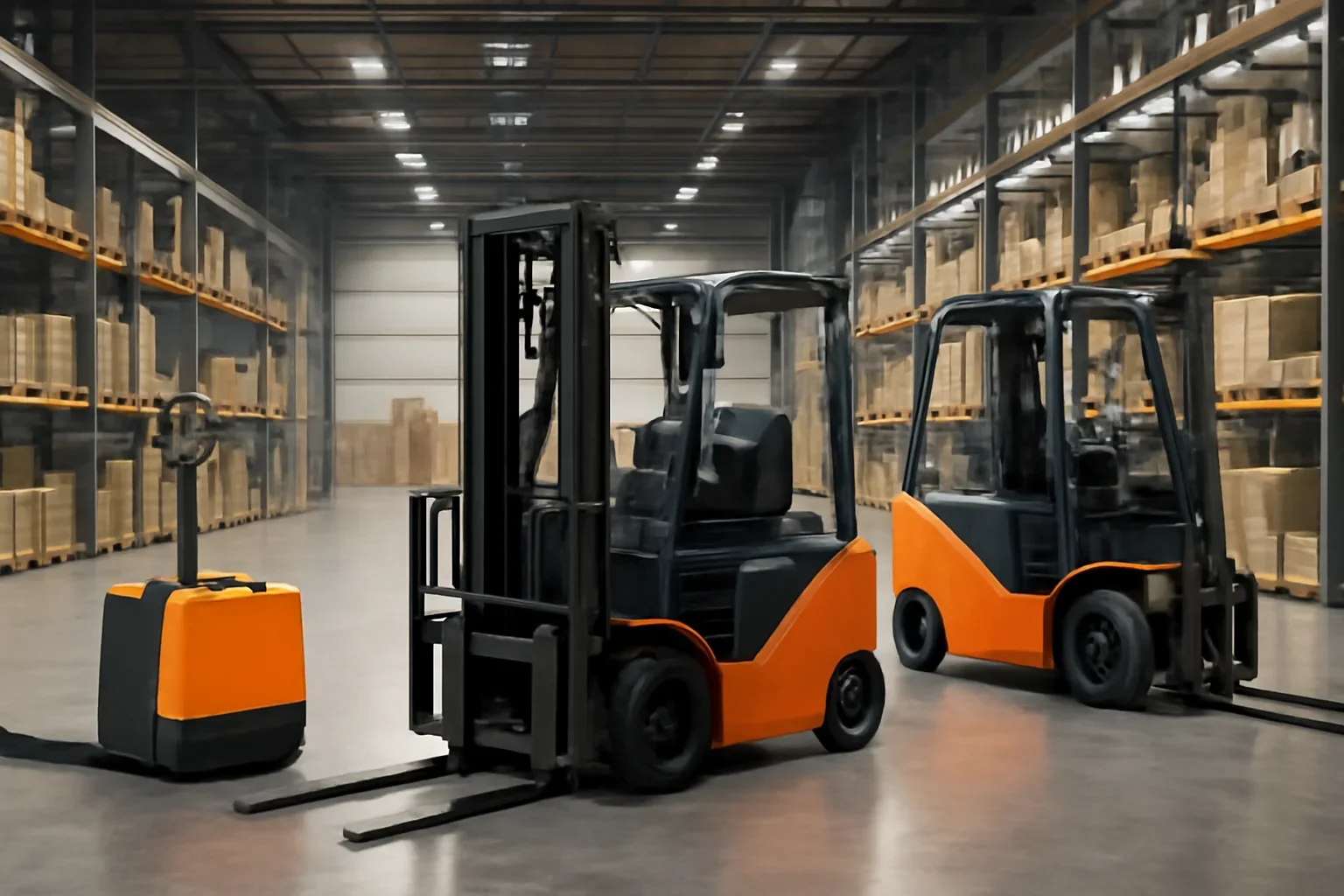
Counterbalance trucks, reach trucks, order pickers, pallet jacks, and stackers each solve different movement problems.
Electric forklifts cover a wide range of warehouse needs, from common pallet movement to narrow-aisle storage and high-bay picking. The right mix of truck class, battery setup, and support options depends on how your team actually works.
Browse equipment classes, battery options, rental programs, and ownership advantages. The best path usually becomes clearer once you look at the workload, battery strategy, service expectations, and whether the project calls for flexibility, long-term ownership, or immediate support. Common questions in this area include electric material handling equipment and forklift equipment options houston.
Electric counterbalance trucks support common pallet movement and dock work. Reach trucks help high-bay storage. Order pickers support fast fulfillment. Pallet jacks and stackers cover shorter-distance or lighter-duty movement.
Lead-acid and lithium systems create different expectations around charging windows, watering, maintenance, and multi-shift planning. Charger compatibility and room setup also influence how smoothly the fleet runs.
Some operations need a purchase path with financing. Others need seasonal rentals, a service-first approach, or a gradual transition from older equipment. The right feature set includes the support structure around the truck.
Counterbalance trucks, reach trucks, order pickers, pallet jacks, and stackers each solve different movement problems.
Battery chemistry, charger style, and charging habits have a major effect on runtime and labor flow.
You can compare sales, rentals, leasing, service plans, and trade-ins based on how your operation actually changes.
You can also review Electric Forklifts, Forklift Batteries, Rentals, and Solutions to compare options before you move ahead.
Send us a few details about your equipment, battery, rental, service, or layout needs and we will outline the next step that fits your operation.
Start with your loads, lift height, aisle constraints, shift structure, and whether flexibility or long-term ownership matters most.
Yes. We regularly help companies compare equipment classes, battery setups, rental terms, and purchasing paths before they decide.
You will get a practical follow-up focused on fit, timing, and the next step rather than a generic sales response.